
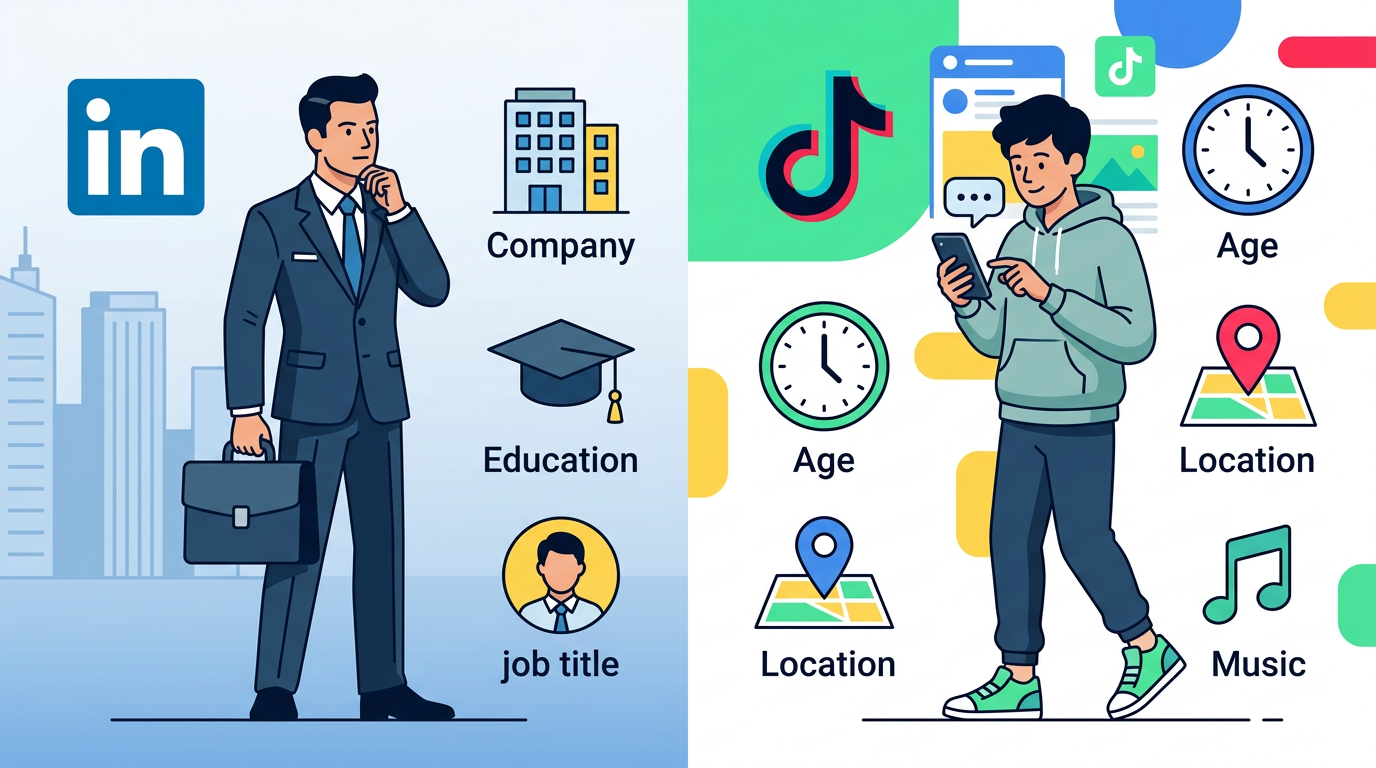
LinkedIn Ads and TikTok Ads are both self-serve social advertising platforms, but they target fundamentally different audiences and serve different business goals. LinkedIn's ad platform allows targeting by detailed professional attributes including job title, company, industry, job seniority, and skills, making it the go-to channel for B2B campaigns and professional services. TikTok's self-serve advertising platform supports in-feed video ads, branded hashtag challenges, branded effects, and TopView formats, all optimized for short-form vertical video and behavioral targeting (age, gender, location, device, interests, and in-app behaviors like video interactions). If you're a South Florida business owner trying to figure out where to spend your next ad dollar, the choice comes down to who you're selling to and what you're asking them to do.
TL;DR
- LinkedIn Ads target professionals by job title, company, and industry with CPCs frequently in the several-dollar range per click, making them ideal for B2B and high-ticket services where customer lifetime value justifies the cost.
- TikTok Ads offer lower CPMs and target by demographics, interests, and in-app behaviors, working best for direct-to-consumer brands selling to younger audiences with visual products.
- LinkedIn accepts traditional static image ads and polished creative, while TikTok requires native-looking vertical video with quick hooks and a user-generated content feel.
- LinkedIn's lead generation forms auto-populate user profile data to reduce friction, while TikTok's pixel tracks website conversions like add-to-cart and purchases for performance optimization.
- The platform choice depends on your business model: B2B professional services with high deal values favor LinkedIn, while consumer brands targeting under-40 audiences with lower price points favor TikTok.
- Both platforms require compliance with FTC truth-in-advertising standards and have strict policies against misleading claims, prohibited products, and inappropriate targeting that can result in ad rejection or account suspension.
TL;DR
- LinkedIn Ads target professionals by job title, company, and industry with CPCs frequently in the several-dollar range per click, making them ideal for B2B and high-ticket services where customer lifetime value justifies the cost.
- TikTok Ads offer lower CPMs and target by demographics, interests, and in-app behaviors, working best for direct-to-consumer brands selling to younger audiences with visual products.
- LinkedIn accepts traditional static image ads and polished creative, while TikTok requires native-looking vertical video with quick hooks and a user-generated content feel.
- LinkedIn's lead generation forms auto-populate user profile data to reduce friction, while TikTok's pixel tracks website conversions like add-to-cart and purchases for performance optimization.
- The platform choice depends on your business model: B2B professional services with high deal values favor LinkedIn, while consumer brands targeting under-40 audiences with lower price points favor TikTok.
- Both platforms require compliance with FTC truth-in-advertising standards and have strict policies against misleading claims, prohibited products, and inappropriate targeting that can result in ad rejection or account suspension.
The Audience Gap: Professionals vs. Entertainment-First Users
The single biggest difference between these platforms is who shows up and why. LinkedIn's user base is concentrated among higher-income and college-educated adults, making it well-suited to B2B and professional-services advertising compared with more youth-oriented platforms. According to Pew Research Center's social media use survey, U.S. Adults who use TikTok skew younger than the overall social media population, with particularly high adoption among users aged 18-29, while usage among those 50 and older is significantly lower. In contrast, platforms like LinkedIn show higher adoption among users with higher levels of education and income, who are often older working professionals.
What that means in practice: if you're a Delray Beach law firm trying to reach CFOs at mid-market companies, LinkedIn is the only platform where you can natively target by job title and company size. If you're a Boca Raton boutique trying to reach college students and young professionals who scroll for entertainment, TikTok gives you access to that audience at scale and at a lower cost per thousand impressions.
For local service businesses in U.S. Cities such as Boynton Beach, Boca Raton, or Delray Beach, demographic data indicate a substantial population of higher-income and college-educated residents, which overlaps with LinkedIn's core user demographics and may increase the relevance of LinkedIn Ads for local professional-services targeting (LinkedIn Ads: Advertising on LinkedIn). U.S. Census Bureau QuickFacts for Boca Raton city show a relatively high percentage of residents with a bachelor's degree or higher and a median household income above U.S. Averages, and similar patterns appear for surrounding South Florida communities.
Cost Structure: Why LinkedIn Charges More (and When It’s Worth It)
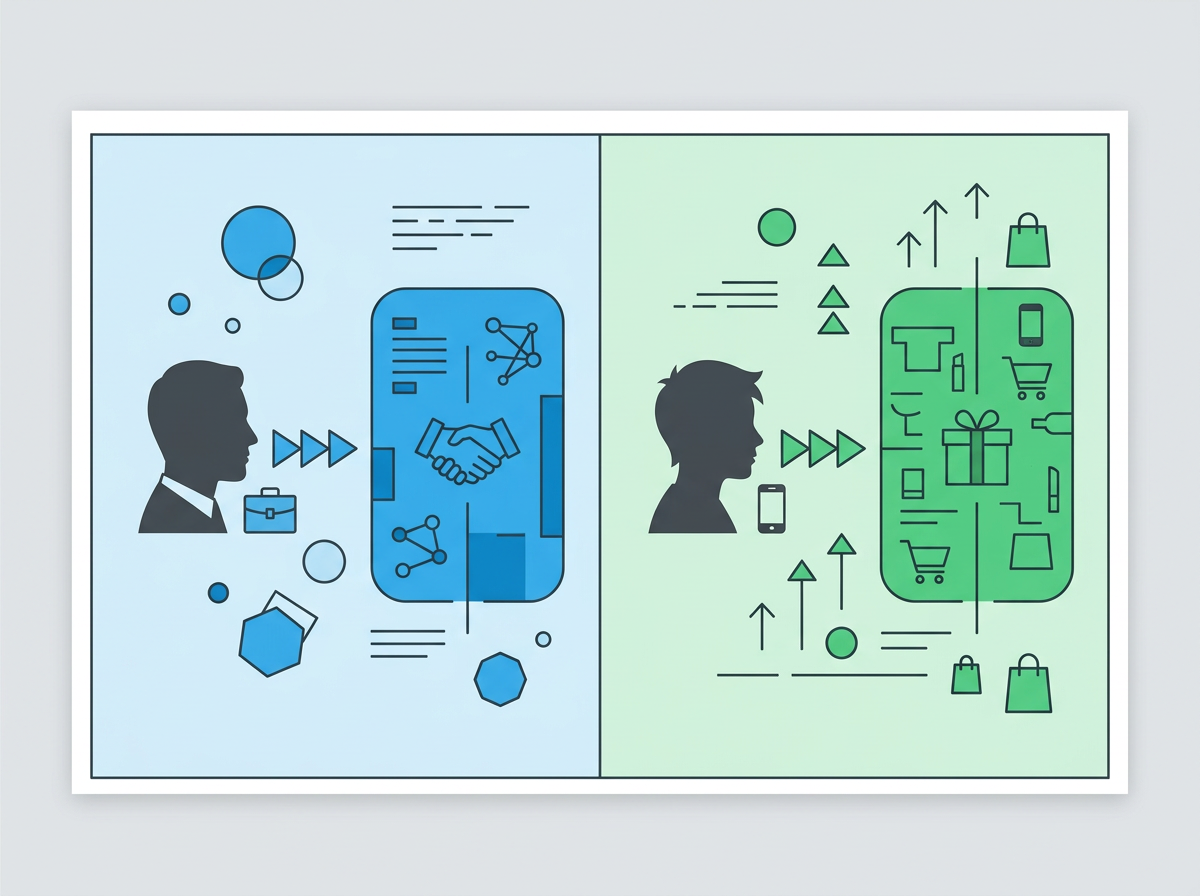
Average cost per click on LinkedIn is typically higher than on many other major social platforms, often several dollars per click, because of its professional audience and B2B focus. Hootsuite's social media advertising benchmark guide reports that LinkedIn tends to have substantially higher CPCs than platforms like Facebook or Instagram, frequently in the several-dollar range per click, which the report links to LinkedIn's unique access to high-value professional audiences and B2B decision-makers.
In contrast, average CPM (cost per 1,000 impressions) on TikTok Ads is generally lower than CPMs on LinkedIn and is competitive with or lower than other major social platforms, making TikTok relatively cost-efficient for broad reach and awareness. A Statista chart on the cost of advertising on leading social media platforms notes that TikTok's average CPM is typically lower than that of LinkedIn and comparable to or lower than other major networks, which positions TikTok as a cost-effective channel for broad-reach advertising and brand awareness campaigns.
The math works like this: if you're paying $8 per click on LinkedIn and your lead-to-customer conversion rate is 10%, you're paying $80 per customer acquisition before factoring in your internal sales cost. That pencils out when your average customer lifetime value is in the thousands or tens of thousands (SaaS, consulting, legal, financial services). It does not pencil out when you're selling a $40 product with no repeat purchase. TikTok's lower CPM and CPC make it viable for direct-to-consumer brands, local retail, and any business where the unit economics require volume at low cost per acquisition.
Targeting: Professional Firmographics vs. Behavioral Signals
LinkedIn's ad platform allows targeting by detailed professional attributes including job title, company, industry, job seniority, and skills, which are core firmographic parameters for B2B campaigns. These attributes are drawn from member profiles on LinkedIn, and they're updated by users themselves, which means the data is generally accurate (people keep their LinkedIn profiles current because recruiters and peers see them).
TikTok Ads Manager supports a range of targeting options such as age, gender, location, device, interests, and in-app behaviors (e.g., video interactions), but it does not provide native targeting by professional job title or company like LinkedIn does. TikTok Ads Manager documentation lists targeting dimensions including demographics (age, gender, location, language), device, interests, and in-app behavior (e.g., video interactions, creator interactions), but the documentation does not include professional attributes such as job title, company name, or industry as targeting options.
What that means: on LinkedIn, you can build an audience of "Directors of Marketing at companies with 50-200 employees in the software industry, located in South Florida." On TikTok, you can build an audience of "women aged 25-34 in Miami who have watched fitness videos in the past 7 days." Both are powerful, but they solve different problems. If your social media strategy includes both organic and paid, the targeting model you need will dictate which platform gets your budget first.

Creative Formats and What They Demand
LinkedIn supports multiple ad formats including Sponsored Content (single image, video, and carousel), Sponsored Messaging, Dynamic Ads, and Text Ads. These formats run across the LinkedIn professional network and can be targeted using LinkedIn's audience attributes. LinkedIn's campaign objectives are oriented around B2B outcomes such as lead generation, website conversions, and website visits, while also supporting brand awareness and engagement.
TikTok's self-serve advertising platform supports in-feed video ads, branded hashtag challenges, branded effects, and TopView formats, allowing advertisers to run video campaigns directly in the TikTok app environment. TikTok Ads Manager's campaign setup lists several objective categories: Awareness (Reach), Consideration (Traffic, App Installs, Video Views, Lead Generation, Community Interaction), and Conversion (Conversions, Catalog Sales). Many objectives are directly tied to video viewing and engagement behavior on TikTok.
Short-form vertical video formats similar to TikTok's core ad units have been shown in industry research to drive strong recall and engagement. Nielsen research on short-form mobile video advertising indicates that vertical, full-screen video placements (formats similar to TikTok's in-feed ads) deliver high ad recall and engagement rates compared with traditional display formats, leading many advertisers to adopt these formats for brand awareness and upper-funnel objectives.
The creative bar is different on each platform. LinkedIn tolerates (and sometimes rewards) static image ads with a headline, body copy, and a CTA button, the kind of asset you can produce in Canva in 20 minutes. TikTok does not. TikTok's algorithm and audience expect native-looking vertical video: quick cuts, on-screen text, a hook in the first three seconds, and a vibe that feels like user-generated content, not a TV commercial. Research on influencer and social video marketing has found that creator-led content on platforms like TikTok can significantly affect purchase intent, supporting the use of TikTok Ads in collaboration with creators for B2C campaigns. A Nielsen study on influencer marketing effectiveness reports that influencer-led campaigns on social platforms can drive substantial lifts in brand familiarity and purchase intent compared with non-influencer digital ads, and specifically highlights the impact of creator content in short-form video environments.
If you don't have in-house video production or a content team that understands TikTok's editorial style, the platform becomes expensive fast, either because you're hiring creators or because your polished corporate video gets scrolled past in two seconds. LinkedIn is more forgiving of traditional marketing creative. If you need help building video-first campaigns or adapting your brand voice to platform-native formats, modern content marketing services can bridge that gap.
When LinkedIn Ads Make Sense
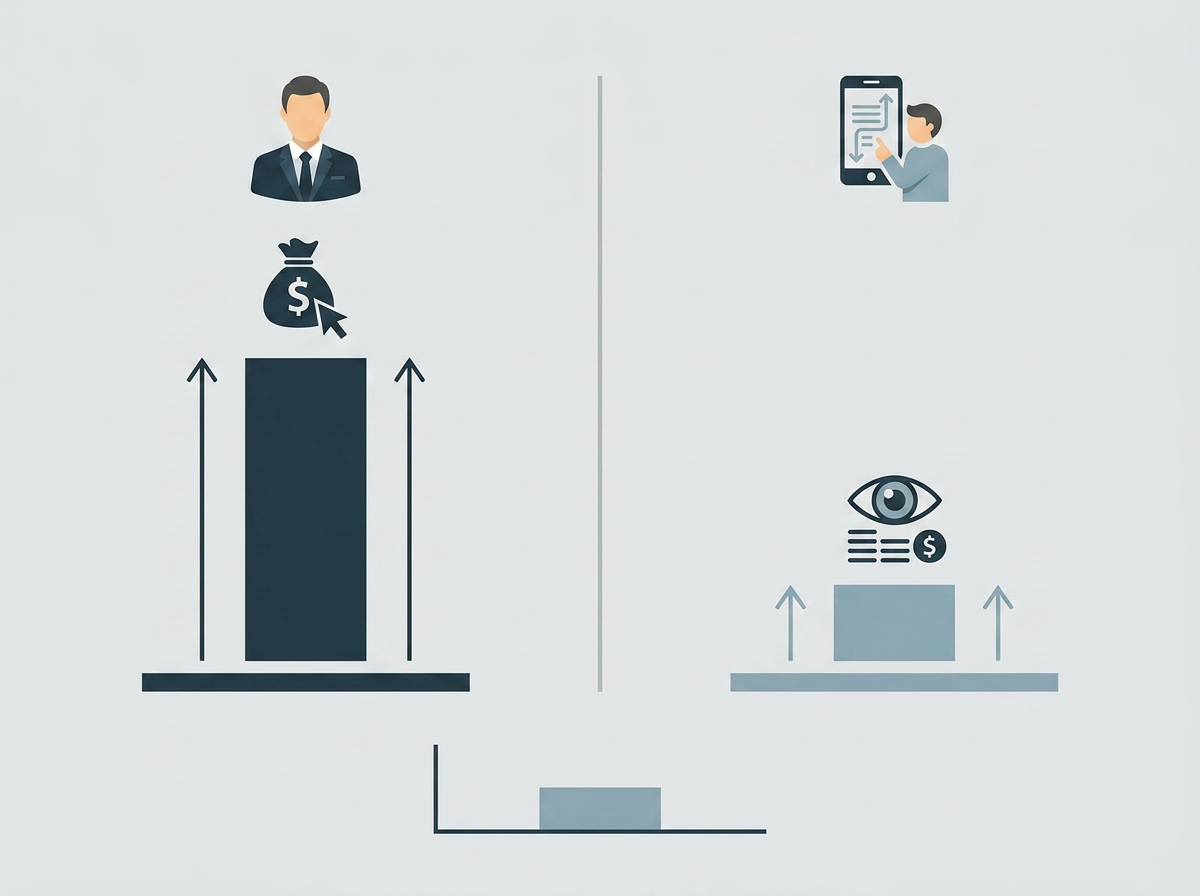
LinkedIn can be effective for B2B lead generation because users are on the platform primarily for professional purposes. A study published in Industrial Marketing Management examining social media use for B2B marketing found that LinkedIn, compared with other platforms, is particularly suited for B2B lead generation since users are on LinkedIn for professional reasons, and that participation in LinkedIn groups and sharing company information correlate with lead generation performance in B2B firms.
LinkedIn reports that advertisers using its lead generation forms can capture leads directly within the platform, reducing friction compared with sending users to external landing pages. LinkedIn's product page for Lead Gen Forms explains that when members click on a LinkedIn ad with a lead form, their profile data (such as name, contact info, company, job title) automatically populates the form, allowing them to submit with a couple of clicks without leaving LinkedIn, which is intended to increase lead volume and reduce drop-off.
LinkedIn gives advertisers several optimization goals, such as clicks, impressions, video views, and leads, and automatically adjusts bids and delivery toward the selected objective using its machine-learning systems. LinkedIn's Campaign Manager documentation explains that advertisers can choose an objective like "Website visits," "Engagement," or "Leads" and that LinkedIn uses machine learning to optimize campaign delivery and bidding toward the objective selected, automatically prioritizing impressions that are more likely to achieve that outcome based on historical performance and member data signals.
LinkedIn also allows use of its Insight Tag for conversion tracking and website retargeting, enabling advertisers to build audiences of site visitors and optimize campaigns based on off-platform actions such as form fills or purchases. LinkedIn's documentation for the Insight Tag notes that it enables in-depth campaign reporting and unlocks valuable insights about website visitors, and that it can be used to track conversions, retarget website visitors, and unlock additional insights about members interacting with ads. This tag can feed conversion data back into LinkedIn's ad delivery algorithms.
In our work with South Florida professional-services firms, LinkedIn Ads make the most sense when the average deal size is high enough to absorb a higher cost per click, the sales cycle involves multiple touchpoints, and the decision-maker has a LinkedIn profile they actually check. If you're also running Google Ads management for search intent, LinkedIn becomes the awareness and consideration layer that warms up cold prospects before they search for your category.
LinkedIn's self-serve ad platform requires a minimum daily budget of US$10 per campaign or per individual ad, and a minimum total (lifetime) budget of US$100 for new campaigns. LinkedIn's help center specifies that for new and existing campaigns, the minimum daily budget is $10 (or the local currency equivalent), and for new campaigns, the minimum lifetime budget is $100 (or the local currency equivalent). These minimums apply at both the campaign and ad level for certain objectives.
When TikTok Ads Make Sense
TikTok's ad platform offers conversion tracking and a website pixel that can measure actions such as page views, add-to-cart events, and purchases from TikTok ad traffic. TikTok's business help center describes the TikTok Pixel as a piece of code that advertisers can place on their website to track user actions (events) such as page view, view content, add to cart, initiate checkout, and complete payment, enabling measurement and optimization of TikTok ad campaigns for conversions.
Global digital ad spending on social media has grown rapidly, and TikTok is one of the fastest-growing social platforms in terms of ad revenue, reflecting its increasing importance as an ads channel compared with older networks. A Statista report on global social media advertising spending shows significant year-over-year growth and identifies newer platforms such as TikTok as major contributors to the expansion of social ad revenue, while more established platforms occupy a smaller but stable share of the social ad market.
TikTok Ads make sense when your product or service has visual appeal, when your target customer is under 40, when you can produce (or hire someone to produce) native-looking vertical video at a sustainable cadence, and when your unit economics allow you to test and learn at volume. The platform rewards brands that understand its entertainment-first culture, the ones that don't try to make TikTok feel like a Facebook ad from 2015.
In our conversations with Boca Raton and Delray Beach retail and hospitality clients, the ones who succeed on TikTok are the ones who give their creative team permission to be weird, to move fast, and to look like they belong in the feed. The ones who fail are the ones who treat TikTok like a billboard with a play button.
Compliance, Policy, and What Gets Your Ad Rejected
Both LinkedIn and TikTok require advertisers to comply with advertising policies that restrict misleading claims, prohibited products, and inappropriate targeting, and violations can result in ad disapproval or account penalties. LinkedIn's Advertising Policies state that ads must not contain false or misleading claims, must comply with applicable laws, and that prohibited content (e.g., illegal products) will be rejected. TikTok's Advertising Policies likewise specify that certain products and content categories are prohibited or restricted and that misleading or deceptive advertising practices are not allowed, with enforcement actions including ad rejection and account suspension.
U.S. Businesses running digital advertising, including on LinkedIn and TikTok, must comply with the Federal Trade Commission's truth-in-advertising standards, which require that ads are truthful, not misleading, and evidence-based. The U.S. Federal Trade Commission explains that its truth-in-advertising laws apply to all forms of advertising, including online and social media, stating that advertisements must be truthful and not misleading, advertisers must have evidence to back up their claims, and ads cannot be unfair.
In the United States, online advertisers using platforms like LinkedIn and TikTok are subject to privacy and data-use laws such as the Children's Online Privacy Protection Act (COPPA) when collecting data from children under 13. COPPA guidance notes that online services, including websites and apps that collect personal information from children under 13, must comply with COPPA's requirements on parental consent and data handling. These requirements can affect ad targeting and data collection when platforms or advertisers interact with children's data.
The practical takeaway: both platforms will reject ads for prohibited content (alcohol, tobacco, certain financial products, healthcare claims without disclaimers), and both will suspend accounts for repeated policy violations. Read the ad policies before you upload creative, and if you're in a regulated industry (legal, financial, healthcare), have someone who understands the rules review your copy before you hit publish.
The Real Question: What Are You Optimizing For?
The LinkedIn-vs.-TikTok decision isn't about which platform is "better"; it's about which one aligns with your business model, your creative capacity, and your customer acquisition economics. If you're a Fort Lauderdale B2B consultancy selling a $50,000 annual contract to a VP of Operations, LinkedIn's professional targeting and lead-gen forms justify the higher CPC. If you're a West Palm Beach activewear brand selling a $60 product to a 28-year-old who discovered you while scrolling at lunch, TikTok's lower CPM and entertainment-first feed are the better bet.
In our experience running campaigns for South Florida businesses, the clients who get the best results are the ones who pick one platform, commit to learning its creative language, and give it a full quarter before deciding whether it works. The ones who split a $2,000 monthly budget across LinkedIn, TikTok, Meta Ads, and Google Ads end up with four underfunded experiments and no clear signal on what's actually driving revenue.
If you're not sure which platform fits your business, or if you've been running ads on one and the numbers aren't adding up, book a free strategy call and we'll walk through your funnel, your creative assets, and your customer data to figure out where your next dollar should go. We work with five high-maintenance clients at a time, so if you're looking for a marketing partner who answers the phone and knows South Florida, let's talk. And if paid social is just one piece of a larger puzzle, search engine optimization services are usually the best long-term investment: paid gets you traffic today, SEO gets you traffic every day.
Further reading: Advertising and Marketing Basics; QuickFacts: Boca Raton city, Florida.
FAQ
What if I’m a local business in South Florida, can I target just my city on these platforms?
Yes, both LinkedIn and TikTok allow geographic targeting by city or radius. You can target specific South Florida cities like Boca Raton, Delray Beach, or Boynton Beach, though LinkedIn's professional audience data suggests higher-income, college-educated residents in these areas may be particularly reachable on that platform (Reach Your Target Audience With LinkedIn Ads).
How much budget do I actually need to test LinkedIn Ads effectively?
LinkedIn requires a minimum $10 daily budget per campaign and $100 lifetime budget for new campaigns. For meaningful testing with B2B campaigns, plan for at least $1,000-$2,000 per month over a full quarter to gather enough data, given the higher cost per click.
Can I run the same creative on both LinkedIn and TikTok?
Generally no. LinkedIn accepts and sometimes rewards static image ads with headlines and body copy, while TikTok requires native-looking vertical video with quick hooks, on-screen text, and a user-generated content style. The creative expectations are fundamentally different.
What if I don’t have video production capabilities for TikTok?
TikTok's platform becomes expensive without native video content, either through hiring creators or because polished corporate videos get scrolled past quickly. If you can't produce or hire for TikTok-style video at a sustainable cadence, the platform may not be cost-effective for your business.
How do I know if my cost per click on LinkedIn is too high?
Calculate your customer acquisition cost by dividing your CPC by your lead-to-customer conversion rate, then compare it to your customer lifetime value. If you're paying $8/click with a 10% conversion rate, that's $80 per customer, which only works if your customer value is in the thousands or tens of thousands.
Can I retarget website visitors on both platforms?
Yes. LinkedIn offers the Insight Tag for conversion tracking and retargeting site visitors, while TikTok provides a pixel that tracks user actions like page views, add-to-cart, and purchases. Both allow you to build custom audiences from website traffic and optimize for conversions.
What happens if my ad gets rejected for policy violations?
Both platforms will reject ads containing prohibited content (alcohol, tobacco, certain financial products, unsubstantiated healthcare claims) and can suspend accounts for repeated violations. Review each platform's advertising policies before uploading creative, especially if you're in a regulated industry like legal, financial, or healthcare.
FAQ
What if I’m a local business in South Florida, can I target just my city on these platforms?
Yes, both LinkedIn and TikTok allow geographic targeting by city or radius. You can target specific South Florida cities like Boca Raton, Delray Beach, or Boynton Beach, though LinkedIn's professional audience data suggests higher-income, college-educated residents in these areas may be particularly reachable on that platform.
How much budget do I actually need to test LinkedIn Ads effectively?
LinkedIn requires a minimum $10 daily budget per campaign and $100 lifetime budget for new campaigns. For meaningful testing with B2B campaigns, plan for at least $1,000-$2,000 per month over a full quarter to gather enough data, given the higher cost per click.
Can I run the same creative on both LinkedIn and TikTok?
Generally no. LinkedIn accepts and sometimes rewards static image ads with headlines and body copy, while TikTok requires native-looking vertical video with quick hooks, on-screen text, and a user-generated content style. The creative expectations are fundamentally different.
What if I don’t have video production capabilities for TikTok?
TikTok's platform becomes expensive without native video content, either through hiring creators or because polished corporate videos get scrolled past quickly. If you can't produce or hire for TikTok-style video at a sustainable cadence, the platform may not be cost-effective for your business.
How do I know if my cost per click on LinkedIn is too high?
Calculate your customer acquisition cost by dividing your CPC by your lead-to-customer conversion rate, then compare it to your customer lifetime value. If you're paying $8/click with a 10% conversion rate, that's $80 per customer, which only works if your customer value is in the thousands or tens of thousands.
Can I retarget website visitors on both platforms?
Yes. LinkedIn offers the Insight Tag for conversion tracking and retargeting site visitors, while TikTok provides a pixel that tracks user actions like page views, add-to-cart, and purchases. Both allow you to build custom audiences from website traffic and optimize for conversions.
What happens if my ad gets rejected for policy violations?
Both platforms will reject ads containing prohibited content (alcohol, tobacco, certain financial products, unsubstantiated healthcare claims) and can suspend accounts for repeated violations. Review each platform's advertising policies before uploading creative, especially if you're in a regulated industry like legal, financial, or healthcare.
Marketing that works, in your inbox
AI search & SEO news, what’s working right now, and guides we actually use with clients. A couple of emails a month, no spam.
Unsubscribe anytime. We treat your inbox the way we treat our clients’ brands.
Hahahaha You are so good